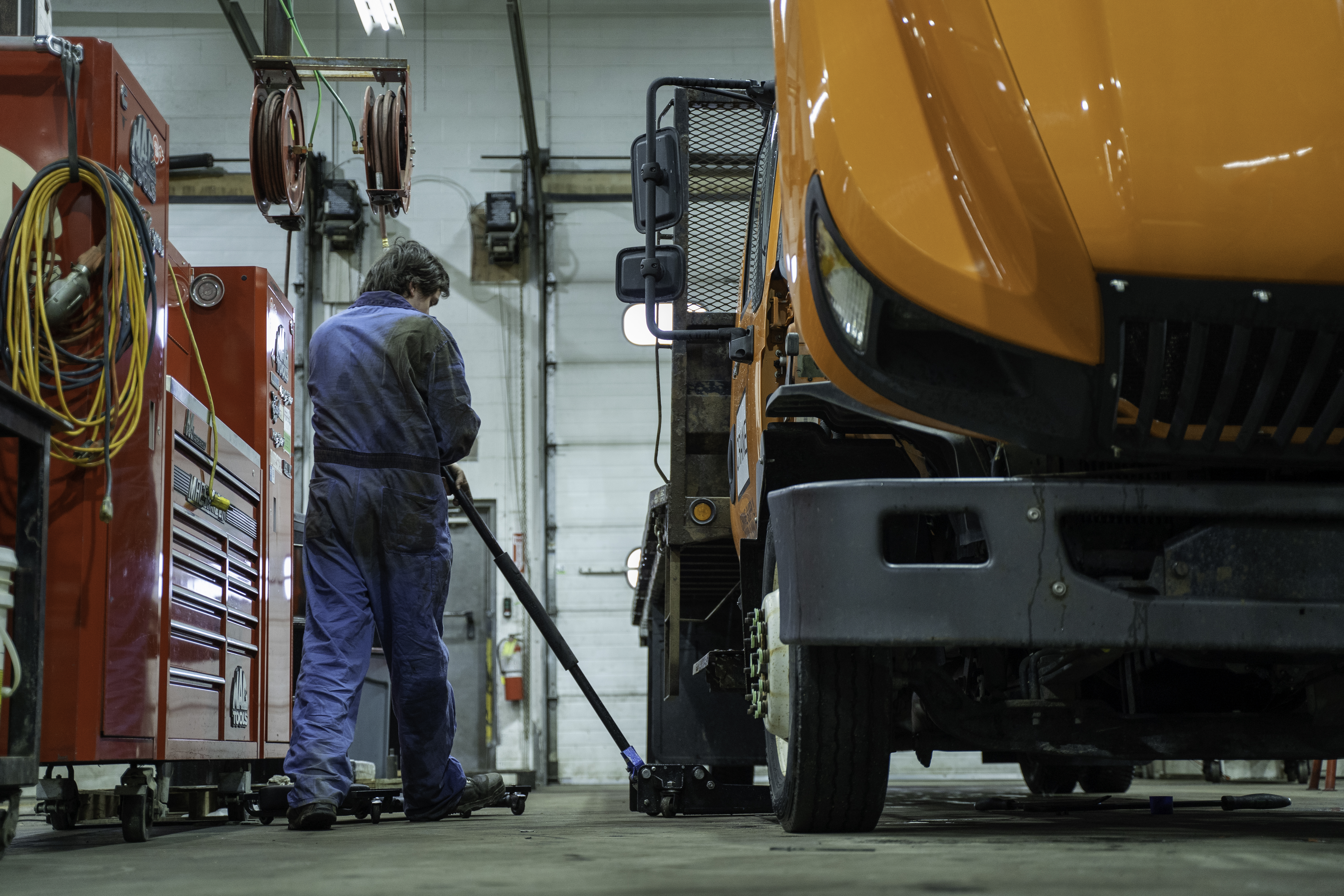
Why Heavy-Duty Repair Shops Stay Busy but Struggle to Grow Profits
Heavy-duty diesel repair shops across the U.S. and Canada are busier than ever. Bays are full. Phones keep ringing. Schedules are booked weeks out.
And yet, many shop owners feel stuck.
Despite the demand, profit does not seem to scale with workload. Cash flow feels tight. Growth feels harder than it should. Adding technicians or bays does not automatically fix the problem.
The truth is uncomfortable, but clear.
Being busy is not the same as being profitable.
For many diesel and heavy-duty repair shops, the real issue is not a lack of work or skilled technicians. It is the systems running the shop. Legacy software, paper-based workflows, and disconnected tools quietly drain profit every single day.
Industry research shows most heavy-duty repair shops lose $5,000 to $15,000 per month to inefficiencies they do not even realize exist. Missed billable labor, delayed invoices, untracked parts, and excessive administrative work add up fast.
This is where modern heavy-duty shop management software changes the equation.
The Busy Trap in Heavy-Duty Repair
Many diesel shops fall into what can be called the busy trap.
- Technicians are working hard
- Work orders are stacking up
- Revenue looks strong on paper
But margins remain thin.
Nearly 25 percent of diesel and auto repair shops do not consistently track technician efficiency or productivity. Only 5 percent reach efficiency above 120 percent, meaning billing 48 or more hours from a 40-hour work week.
That gap represents real money left on the table.
Just 18 minutes of lost labor per technician per day can cost a small three-technician shop over $30,000 per year in unbilled revenue.
These losses do not come from laziness or poor workmanship. They come from outdated systems that cannot capture reality in real time.
Where Profit Leaks Actually Happen
1. Legacy Systems and Disconnected Tools
Many heavy-duty shops still rely on a mix of:
- Paperwork orders
- Whiteboard schedules
- Spreadsheets for parts
- Separate accounting software
Each tool works in isolation. Information must be entered multiple times. Updates lag behind reality. Errors creep in.
When work orders, inventory, scheduling, and accounting do not live in the same system, the shop slows down no matter how hard people work.
Legacy platforms and auto-focused software were not built for the complexity of diesel repair, fleet work, or equipment maintenance. Over time, they cap efficiency and make growth painful.
2. The Hidden Admin Tax
Every heavy-duty shop pays an invisible cost known as the admin tax.
This includes:
- Rewriting notes
- Chasing approvals
- Manually building invoices
- Reconciling parts usage
- Fixing paperwork mistakes
Small repair shops average 15 hours per week on administrative tasks. At typical labor rates, that can mean $90,000 or more per year in lost productive time.
In some shops, admin work consumes35 to 40 percent of a manager or service writer's week.
That is time not spent selling work, supporting technicians, or improving operations.
3. Lost Labor from Poor Time Tracking
Labor is the largest revenue driver in a diesel shop and also the easiest place to lose money.
Without real-time labor tracking:
- Technicians forget to log small tasks
- Time gets rounded down
- Work done between jobs disappears
Many shops operate at 75 to 80 percent efficiency, billing only 30 to 32 hours from a 40-hour week. Top-performing shops target 130 to 150 percent efficiency without burning out their teams.
The difference is not harder work.
It is better labor capture.
Modern diesel repair shop software records time as work happens, ensuring every billable minute makes it to the invoice.
4. Parts and Inventory Blind Spots
Parts management is another major profit leak.
Manual inventory tracking leads to:
- Ghost stock (parts that appear available but are not)
- Unbilled parts
- Overstocked slow movers
- Missed core credits
A technician grabbing a small part and forgetting to note it might seem minor. Across dozens of jobs, it adds up quickly.
When parts are not tied directly to work orders in real time, revenue slips through the cracks.
5. Slow Approvals and Late Invoices
Every delay between diagnosis and approval costs bay time.
Phone calls, emails, and PDFs slow things down. Trucks sit waiting. Technicians switch tasks or wait idle.
Shops using digital approvals have reduced approval times by up to 70 percent and increased throughput by 18 percent without adding bays or staff.
Late invoicing creates another problem. Cash flow slows, and billing errors increase. The longer invoicing takes, the more likely something gets missed or disputed.
6. No Visibility Into What Is Really Happening
Perhaps the most dangerous issue is lack of visibility.
In industry surveys,17 percent of heavy-duty shop owners said they do not know their net profit. Many more suspect inefficiencies but cannot pinpoint where they are.
Without real-time reporting, shops cannot answer:
- Which jobs are most profitable?
- Where is labor being lost?
- Which parts are hurting margins?
Without data, improvement becomes guesswork.
What Modern Heavy-Duty Shop Management Software Fixes
This is exactly why modern heavy-duty shop management software exists and why shops are switching.
A platform like ShopView replaces fragmented workflows with a single, real-time operating system built specifically for diesel and equipment repair.
Digital Work Orders That Stay Live
Digital work orders eliminate paperwork delays and keep everyone aligned.
- Technicians update jobs in real time
- Parts and labor attach automatically
- Status is visible instantly
- Invoices build themselves
Nothing gets lost. Nothing gets re-entered.
Real-Time Labor Capture
Modern systems track time as work happens, not hours later.
That leads to:
- More accurate billing
- Better efficiency data
- Less friction for technicians
Many shops recover 1 to 1.5 billable hours per technician per day, translating into $5,000 or more in additional monthly revenue without adding staff.
Integrated Parts and Inventory Management
When inventory is tied directly to work orders:
- Parts are always billed
- Stock levels stay accurate
- Reorders happen automatically
- Cores and warranties are not forgotten
The workflow becomes simple and complete.
Part to job to invoice. No gaps.
Smarter Scheduling and Bay Utilization
Dynamic scheduling tools replace whiteboards and guesswork.
- Visual job boards
- Skill-based assignments
- Faster rescheduling when delays happen
The result is higher bay utilization and less idle time.
Real-Time Reporting and Control
Dashboards show what is actually happening.
- Technician efficiency
- Labor versus parts margins
- Work order cycle times
- Revenue trends
Instead of reacting at the end of the month, shop owners can adjust daily.
Why This Matters Now
Heavy-duty repair is not getting simpler. Labor shortages, rising costs, and higher customer expectations are here to stay.
The shops that win are not the busiest.
They are the most operationally clear.
They do not guess. They see.
Modern diesel repair shop software is not about adding complexity. It is about removing friction so hard work finally translates into profit.
Final Thought: Busy Is Optional. Profitable Is Not.
If your shop feels slammed but margins will not move, the problem is rarely your people or your demand.
It is your system.
Upgrading to modern heavy-duty shop management software is often the fastest way to reclaim lost labor, tighten workflows, and turn busyness into sustainable profit.
See what a modern heavy-duty workflow looks like.
Book a ShopView demo or start a free trial.
Ready to transform your shop?
We've been in the heavy-duty truck repair business for 20+ years, so we know what slows shops down. That's why we built ShopView—to eliminate the bottlenecks.
.jpg)