How Heavy-Duty Repair Shops Can Eliminate Work Order Delays
In heavy-duty repair operations, speed isn't about rushing repairs - it's about protecting profitability, technician productivity, and vehicle uptime.
Every extra minute a work order stays open means a truck sitting idle, a technician pulled away from the tools, and an invoice waiting to be sent. Yet in many diesel and fleet repair shops, slow work orders are so common they're treated as unavoidable.
They aren't.
Studies across maintenance and fleet operations consistently show that technicians spend only 25-35% of their day on actual wrench time, while top-performing teams reach 50-55%. The rest of the day disappears into paperwork, waiting on information, tracking down parts, and administrative cleanup.
That gap represents thousands of dollars per technician each year, and most shops never see it on a financial report.
The Hidden Cost of Slow Work Orders
When work orders take too long, the damage compounds across the business:
- Lost technician productivity: Every administrative task steals time from revenue-producing work.
- Delayed invoicing: If work orders aren't finalized, invoices don't go out.
- Unbilled labor: Prep, cleanup, diagnostics, and small fixes often go undocumented.
- Customer frustration: Lack of visibility leads to constant interruptions and phone calls.
- Compliance risk: Incomplete or missing records expose shops to DOT penalties.
One industry analysis found that failing to capture just 25 minutes of billable time per job can cost a shop over $29,000 per technician per year. Multiply that across a full crew, and the losses escalate quickly.
Why Work Orders Take So Long in Heavy-Duty Shops
1. Outdated, Manual Processes
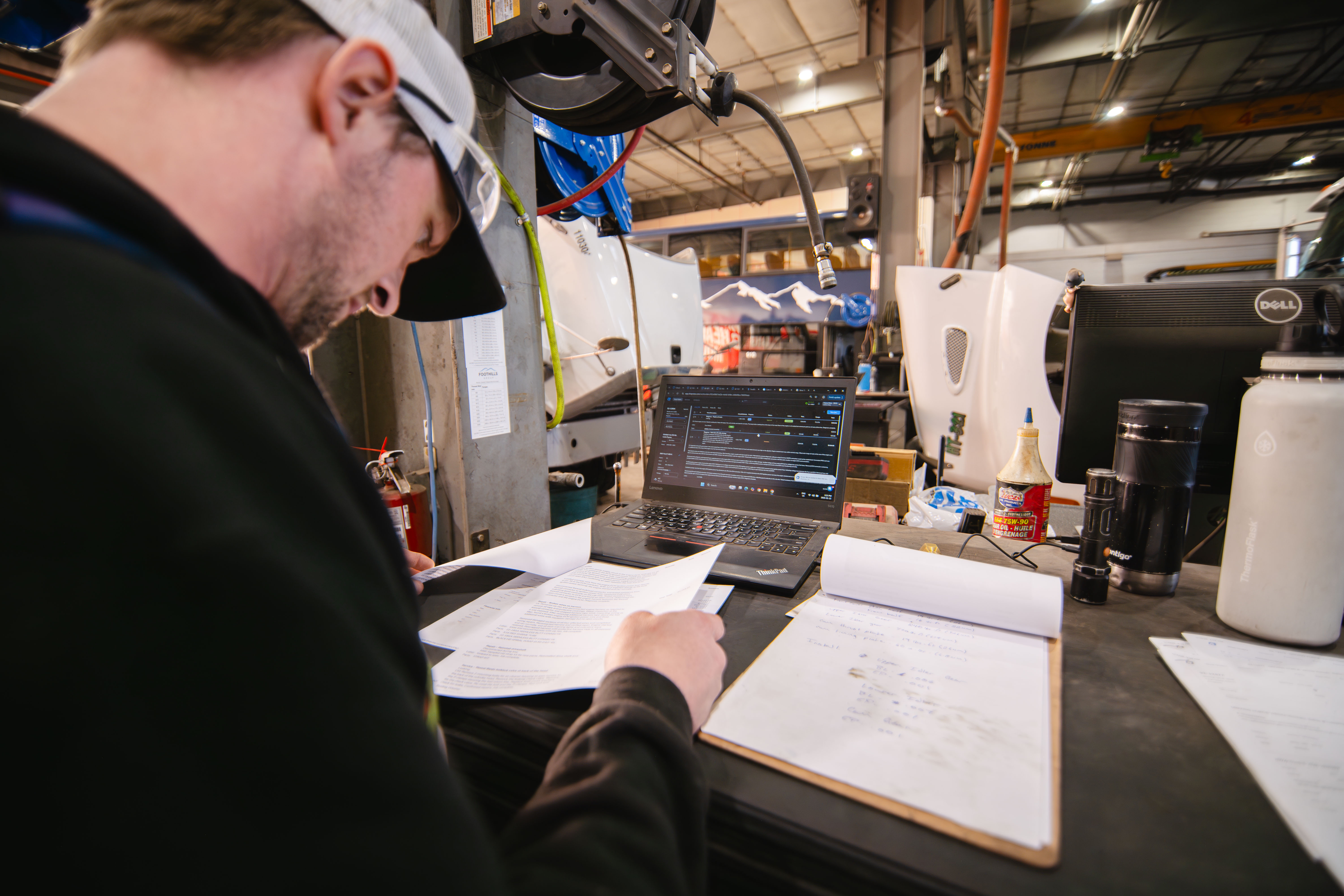
Many heavy-duty shops still rely on paper work orders, clipboards, or shared spreadsheets. These systems force teams to:
- Write information by hand
- Re-enter it later
- Track down missing or illegible paperwork
- Wait for documents to move between departments
Paper creates built-in delays. A technician may finish a repair, but billing waits until paperwork makes it back to the office, sometimes days later.
2. Disconnected Systems and Data Silos
In many shops, work orders touch multiple systems that don't communicate:
- Technicians record notes one way
- Parts are tracked elsewhere
- Invoices are built separately
This lack of integration leads to duplicate entries, missed updates, and constant status chasing. If it takes hours to open, update, or close a work order, the software itself has become the bottleneck.
3. Excessive Administrative Burden on Technicians
Technicians didn't enter the trade to do paperwork.
Yet many spend hours per day logging labor, tracking parts, filling out inspection forms, and hunting for information. Surveys show paperwork is one of the most frustrating parts of the job, with over 30% of technicians saying they spend too much time just looking for information.
When documentation feels painful, it gets delayed-or done poorly-leading to lost revenue and inaccurate records.
4. Wrench Time Leakage from Waiting and Interruptions
Slow work orders aren't just about paperwork. They're tied to broader inefficiencies:
- Waiting on approvals
- Searching for service history or manuals
- Getting pulled off jobs to answer status questions
- Waiting on parts or instructions
Without real-time visibility, interruptions multiply. Each interruption breaks technician's focus and reduces productivity.
5. Compliance and Documentation Drag
Heavy-duty repair shops face strict documentation requirements. DOT inspections, DVIRs, brake checks, and maintenance records must be accurate and retained.
Paper-based systems make compliance slow and risky. DOT recordkeeping violations can reach $1,584 per day, and audits increasingly require digital records within short notice.
When compliance isn't built into the workflow, it becomes a constant source of delay and stress.
The Operational Impact of Slow Work Orders
When these issues persist, shops experience:
Lower Technician Productivity
Increasing wrench time from 30% to 40% is equivalent to adding an extra technician without hiring.
Delayed Cash Flow
Slow work orders delay invoicing. Digital workflows reduce time-to-invoice from days to minutes.
Missed Charges and Errors
Manual entry leads to missed parts, redundant labor, and billing disputes.
Technician Burnout
Good technicians want to fix trucks, not fight systems. Slow processes hurt morale and retention.
Customer Friction
Without visibility, customers call for updates. Transparency becomes a competitive advantage.
How Modern Work Order Systems Fix the Problem
Digital, Real-Time Work Orders
Modern heavy-duty shop software replaces paper with mobile-friendly digital work orders. Technicians log work as it happens, not hours later.
What once took 20-30 minutes of end-of-day paperwork now takes just a few taps.
Integrated Parts, Labor, and Invoicing
With an integrated system, parts usage, labor time, inventory, and invoicing are connected. Add a part once, and it flows automatically to inventory and billing.
No re-entry. No delays.
Real-Time Visibility and Communication
Managers see job status instantly. Parts teams know what's needed. Customers get updates without calling.
Fewer interruptions mean more wrench time.
Automation of Routine Steps
Automated approvals, preventive maintenance reminders, and inspection workflows eliminate waiting and forgotten steps.
Nothing stalls because someone forgot to move it forward.
Built-In Compliance and Audit Readiness
Digital inspections, required fields, time stamps, and searchable records make compliance part of daily work, not a separate task.
Audits become simple lookups, not emergencies.
Data That Drives Continuous Improvement
Modern systems track:
- Work order cycle time
- Wrench time utilization
- Time-to-invoice
- Bottlenecks by stage
With real data, shops improve continuously instead of guessing.
The Bottom Line
Slow work orders aren't inevitable-they're a sign of outdated systems.
Modern, integrated work order software like ShopView helps heavy-duty repair shops eliminate delays, capture every billable minute, improve cash flow, and give technicians their time back.
In an industry where downtime is the enemy, faster work orders aren't optional.
They're essential.
Ready to Speed Up Your Work Orders?
If your shop is losing time to paperwork, disconnected systems, or delayed invoicing, it's time for a better approach.
Schedule a live demo or start a free trial of ShopView and see how modern work order management increases wrench time, accelerates billing, and simplifies compliance without adding headcount.
Stop managing work orders. Start accelerating them.
Ready to transform your shop?
We've been in the heavy-duty truck repair business for 20+ years, so we know what slows shops down. That's why we built ShopView—to eliminate the bottlenecks.