Mobile Repair Tech for Heavy-Duty Shops: Road Calls That Drive Profit
Mobile service is no longer optional for heavy-duty repair shops. Fleets expect it. Owner-operators demand it. And the shops that deliver it profitably are winning market share while competitors stay stuck in their bays.
But mobile repair comes with unique challenges. Done right, it's a high-margin growth engine. Done wrong, it's a money pit of unbilled hours, lost parts, and frustrated customers.
Here's how to build a mobile repair operation that actually drives profit.
Why Mobile Service Matters
Every hour a truck sits broken down costs the fleet money -$450-$760 per day in lost revenue, driver wages, missed deliveries, and penalties. When you can fix a truck where it sits - at a terminal, job site, or roadside - you become a hero.
Mobile service also:
- Expands your market: You're not limited to trucks that can drive to your shop.
- Builds loyalty: Rescue a fleet once, and they remember forever.
- Fills gaps: When in-shop bays are slow, mobile techs stay productive.
- Commands premium pricing: Urgency and convenience justify higher rates.
The opportunity is real - but so are the operational challenges.
The Mobile Repair Challenges
1. Dispatching and Scheduling
Who's closest to the call? Who's available? Who has the right skills for the job? Without real-time visibility, dispatching is guesswork - and guesswork costs money.
2. Parts and Inventory
Service vans are rolling parts rooms. If you don't track what's on each truck, you end up with techs who can't complete jobs because they're missing a $10 part - or thousands in shrinkage from unaccounted inventory.
3. Labor Capture
Travel time, diagnostic time, waiting time, repair time - it all needs to be tracked and billed. Paper-based systems lose hours every week to forgotten or unbilled labor.
4. Documentation and Communication
Customers expect updates. Disputes happen. Without photos, signatures, and digital records, you're exposed - and your credibility suffers.
5. Integration with Shop Operations
Mobile service can't be a separate silo. It needs to flow into the same system as in-bay repairs - same customers, same invoicing, same reporting.
Building a Profitable Mobile Operation
1. Equip Your Techs for Success
Mobile techs need more than a truck and a toolbox. They need:
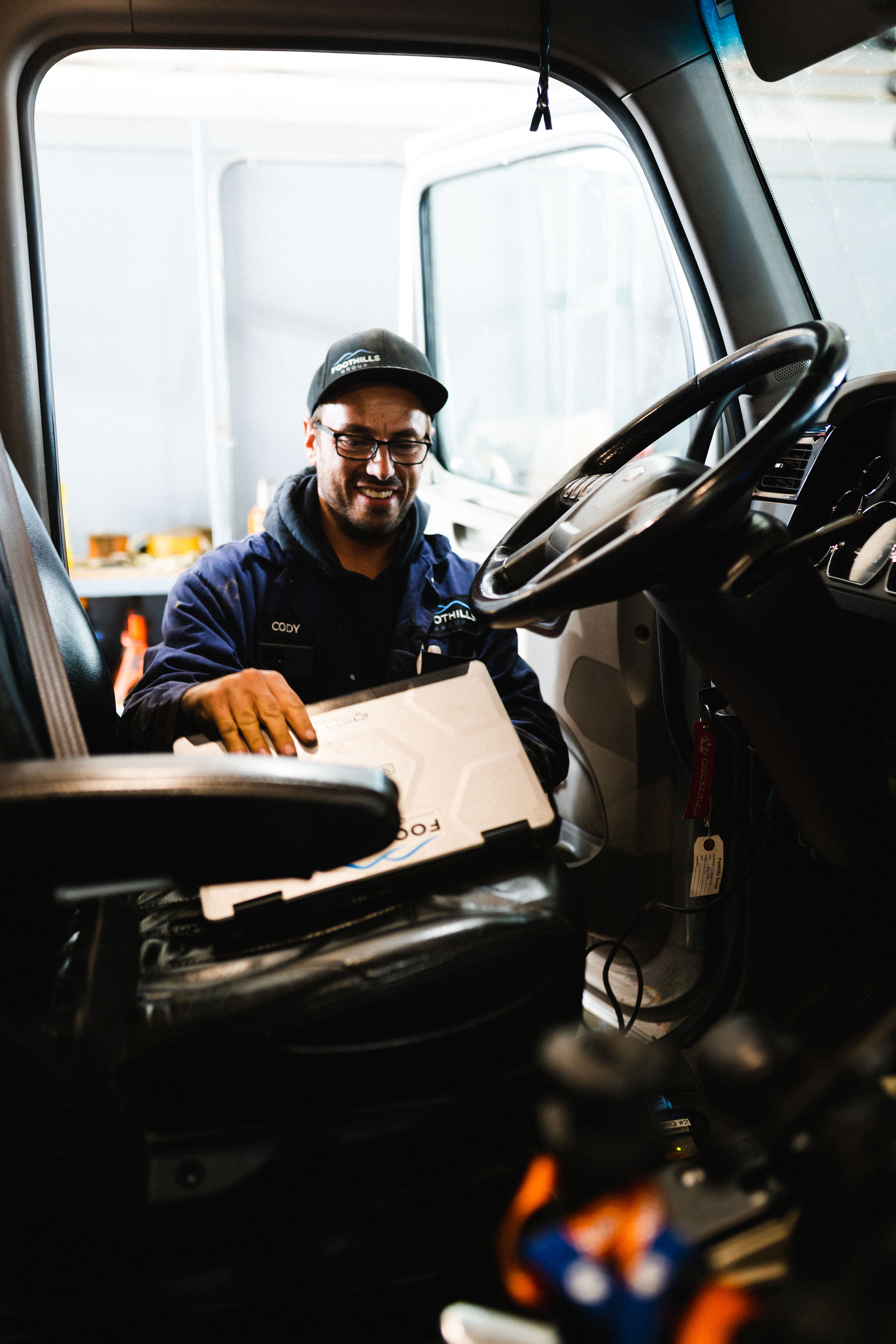
- Diagnostic equipment: OBD readers, fault code scanners, laptops with OEM software.
- Stocked vans: Common filters, belts, hoses, fluids, electrical components, brake parts.
- Communication tools: Phones or tablets with dispatch software, GPS, and camera.
- Safety gear: Cones, reflective vests, lighting for roadside work.
Invest upfront in proper equipment, and your techs will complete more jobs on the first visit.
2. Use Mobile Dispatch Software
The right software transforms mobile operations:
- Real-time dispatching: See tech locations and assign calls intelligently.
- Digital work orders: Techs receive job details on their device, add notes and photos, capture signatures.
- Time tracking: Clock in/out by job - travel, diagnostic, repair - automatically.
- Parts tracking: Log parts used from the van against the work order.
- On-site invoicing: Generate and collect payment before leaving the job.
ShopView was built for heavy-duty shops running both in-bay and mobile service. One system, full visibility, no double entry.
3. Track Van Inventory Religiously
Every service van should have a defined inventory list - what parts belong on that truck and in what quantities.
- Daily checks: Techs verify stock at start and end of shift.
- Automatic reordering: Replenish from shop inventory based on usage.
- Accountability: Any discrepancy gets investigated immediately.
Untracked van inventory is a guaranteed source of shrinkage and unbilled parts.
4. Bill Travel and Urgency Appropriately
Mobile service costs more to deliver than in-shop work. Your pricing should reflect that:
- Travel time: Bill portal-to-portal or per-mile - don't absorb it.
- Trip charges: Flat fee for dispatch plus mileage.
- After-hours premiums: Nights, weekends, and holidays command higher rates.
- Emergency surcharges: Urgent calls get urgent pricing.
Communicate pricing clearly upfront so there are no surprises - and no disputes.
5. Train Techs on Customer Communication
Mobile techs are the face of your business in the field. They need to:
- Arrive professionally - clean truck, proper uniform, on time.
- Communicate clearly about diagnosis, repair options, and costs.
- Document everything - photos of damage, parts replaced, final condition.
- Collect approvals and signatures before work begins.
Professional field service builds trust and repeat business.
The ROI of Mobile Service Done Right
Shops that implement mobile service with the right systems see real results:
- Higher revenue per tech: Mobile work often bills at higher rates than in-shop.
- More calls per day: Efficient dispatching and stocked vans mean fewer wasted trips.
- Faster payment: On-site invoicing cuts DSO to near zero for mobile jobs.
- Customer loyalty: Being there when they need you most creates lasting relationships.
- Competitive advantage: Not every shop offers mobile service - those that do stand out.
One ShopView customer reported that mobile service grew from 10% of revenue to 30% within a year of implementing digital dispatch and tracking.
Common Mistakes to Avoid
- Treating mobile as an afterthought: It needs its own processes, pricing, and tracking.
- Under-stocking vans: Incomplete jobs kill profitability and customer satisfaction.
- Not billing all labor: Travel, waiting, and diagnostic time must be captured.
- Poor communication: Customers in the dark become frustrated customers.
- Running mobile and shop on separate systems: Integration is essential for efficiency and reporting.
Conclusion: Mobile Service Is a Profit Center
Mobile repair isn't just a convenience offering - it's a strategic growth lever. Fleets value shops that can respond fast and fix trucks where they are. And with the right systems, mobile service delivers margins as good or better than in-shop work.
Invest in equipment, software, and training. Track everything. Bill appropriately. And watch mobile service become one of your most profitable lines of business.
👉Ready to build a profitable mobile operation?Book a free demo of ShopView and see how purpose-built software makes mobile service scalable and profitable.
Ready to transform your shop?
We've been in the heavy-duty truck repair business for 20+ years, so we know what slows shops down. That's why we built ShopView—to eliminate the bottlenecks.