Best Heavy-Duty Repair Shop Software for 2026
Most heavy-duty repair shops are not struggling because of a lack of work.
They are struggling because of what happens between the work being done and the money being collected.
Technicians stay busy all day. Bays are full. Jobs keep moving. But at the end of the week, something still feels off. Margins are tighter than expected. Invoices take too long to go out. Labor hours do not fully match the work performed. Parts are harder to track than they should be.
This is not a people problem.
It is a systems problem.
And in most cases, it comes down to the software running the shop.
Choosing the best heavy-duty repair shop software is not about finding the tool with the most features. It is about finding the system that gives you control over your operation without slowing your team down.
Why Most Heavy Duty Repair Software Falls Short
Many shop owners have already tried one or two systems before landing here.
On paper, they all promise the same things. Better organization. More visibility. Improved efficiency.
But in real-world truck, diesel, and heavy equipment shops, the experience is often very different.
Common issues include:
-
Work orders that take too long to build
-
Technicians avoiding the system because it slows them down
-
Poor visibility into job status during the day
-
Parts and labor not consistently tied to invoices
-
Reporting that shows results too late to act on
The result is a shop that looks busy but is not operating at full potential.
Most traditional truck repair shop software and heavy equipment repair software were not built for how modern heavy-duty shops actually run. They track activity, but they do not eliminate friction.
And friction is where revenue gets lost.
What the Best Heavy Duty Repair Shop Software Actually Does
The best systems do something different.
They simplify the way work moves through your shop.
Instead of adding steps, they remove them.
Instead of requiring constant oversight, they create clarity by default.
A strong, heavy-duty repair shop software platform should help your team:
-
Create work orders quickly without unnecessary back and forth
-
Capture technician labor in real time without extra effort
-
Track parts accurately from intake to billing
-
See the status of every job without chasing updates
-
Turn completed work into invoices without delay
Whether you are running a truck repair shop, managing fleet maintenance, or handling heavy equipment service, the goal is the same.
You want a system that helps you convert work into revenue more consistently.
What to Look for in Truck and Heavy Equipment Shop Software
If you are actively comparing solutions, focus on the factors that actually impact your day-to-day operation.
Speed of Workflow
Every extra step in your system creates delay.
The best truck repair software allows your team to move quickly from job intake to completion. Work orders should not feel like paperwork. They should feel like part of the workflow.
Technician Adoption
If your technicians are not using the system consistently, everything else breaks down.
Ease of use is not optional. It directly impacts labor capture, job accuracy, and overall efficiency.
Real-Time Visibility
You should not have to guess what is happening in your shop.
A good truck shop management software platform gives you a clear view of all active jobs, technician activity, and bottlenecks as they happen.
Labor Capture
Missed labor is one of the biggest hidden losses in heavy-duty shops.
Your system should make it easy to log time correctly without adding friction for technicians or admin staff.
Parts and Inventory Control
In heavy-duty operations, parts are often high-value and tightly linked to job timelines.
Your software should help you track parts accurately and ensure they are properly billed.
Why Shops Are Moving Toward Simpler, Faster Systems
There is a clear shift happening in the industry.
Shop owners are moving away from complex systems that try to do everything but end up slowing everyone down.
They are choosing platforms that focus on:
-
Simplicity
-
Speed
-
Real-world usability
-
Strong support
-
Continuous improvement
This shift is especially clear in independent and mid-sized shops where every hour and every job matters.
The goal is not to add more software.
It is to remove friction from the work that already exists.
Why Shops Are Switching to ShopView
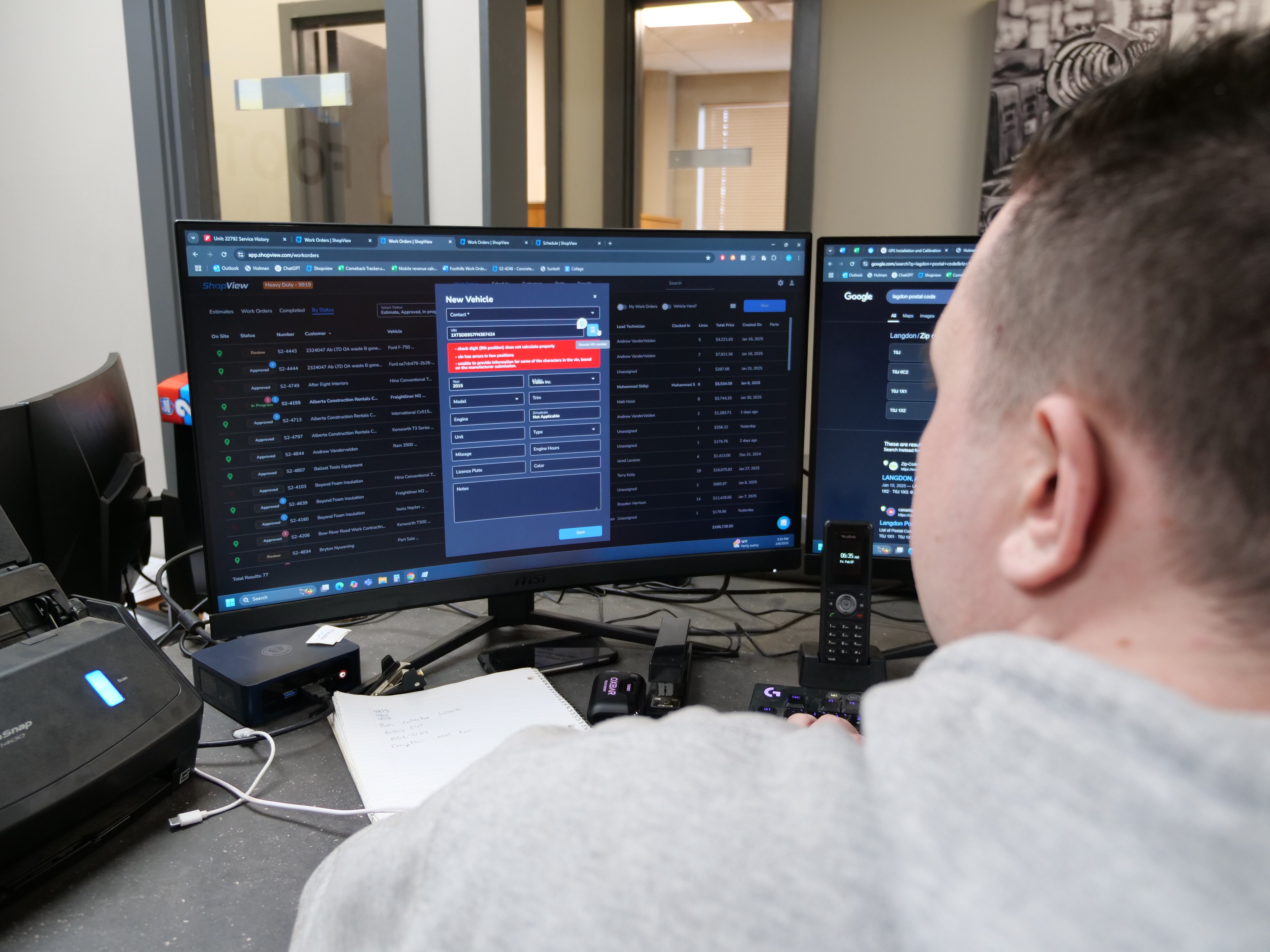
ShopView was built specifically for heavy-duty repair environments including truck, trailer, diesel, and equipment shops.
It was not adapted from light-duty systems.
It was designed around how real shops operate.
That difference shows up immediately in day-to-day use.
Shops that switch to ShopView often report:
-
Faster work order creation
-
Better technician engagement with the system
-
Less time spent on administrative tasks
-
More accurate labor tracking
-
Improved visibility across all jobs
-
Faster and more consistent invoicing
Instead of forcing your team to adapt to the software, ShopView fits into your existing workflow and improves it.
👉 See how real shops improved performance with ShopView.
Recognized for Customer Satisfaction in 2026

ShopView was awarded Best for Customer Satisfaction in 2026 by Software Advice.
This recognition is based entirely on verified user feedback from real shops using the platform daily.
With a 5.0 overall rating, users consistently highlight:
-
Ease of use from day one
-
Fast onboarding for teams
-
Strong and responsive support
-
Regular updates and improvements
One user shared:
“It only took me one day of training to get the hang of it. Now I use it constantly and it has made my daily tasks much more efficient.”
Another noted:
“There is a lot of communication and new features coming regularly to make the process easier.”
A common theme across reviews is that the team behind the software actively listens and adapts based on real shop feedback.
Built for Truck, Trailer, and Heavy Equipment Shops
ShopView supports a wide range of operations, including:
-
Truck and trailer repair shops
-
Heavy-duty truck repair shops
-
Heavy equipment repair shops
-
Fleet maintenance operations
This flexibility allows shops to manage different types of work within a single system without creating complexity.
Whether you are servicing diesel trucks, managing mixed fleets, or handling construction equipment, the platform is designed to support your workflow.
The Real Impact of the Right Software
When you choose the best heavy duty repair shop software, the impact is not just technical.
It shows up in how your shop runs every day.
You see it in:
-
Fewer delays between jobs
-
Better coordination between front desk and technicians
-
More accurate billing
-
Less time spent fixing mistakes
-
Greater confidence in your numbers
Most importantly, you gain control.
You are no longer reacting to problems after they happen. You are managing the shop in real time.
Final Thoughts
The best heavy-duty repair shop software is not the one with the longest feature list.
It is the one that helps your shop operate with more clarity, speed, and consistency.
If your current system is slowing your team down, creating gaps in your workflow, or making it harder to capture the full value of your work, it may be time to look at a better approach.
ShopView is built to solve exactly those problems.
And for shops that want to improve performance without adding complexity, it is worth a serious look.
👉 Book a personalized demo of ShopView
Ready to transform your shop?
We've been in the heavy-duty truck repair business for 20+ years, so we know what slows shops down. That's why we built ShopView—to eliminate the bottlenecks.